
I’ve been through a few technological changes in photography.
In the late 1980s, I was doing work experience at the Adelaide Advertiser when colour was introduced. Some of the veteran news photographers, who had spent their careers working with black and white film, weren’t particularly interested in changing. Then they were told that front page photographs would only be published in colour.
That made a difference. A front page was coveted by news photographers, as were press awards, so colour suddenly wasn’t simply a new technology. It became part of getting the opportunities they wanted.
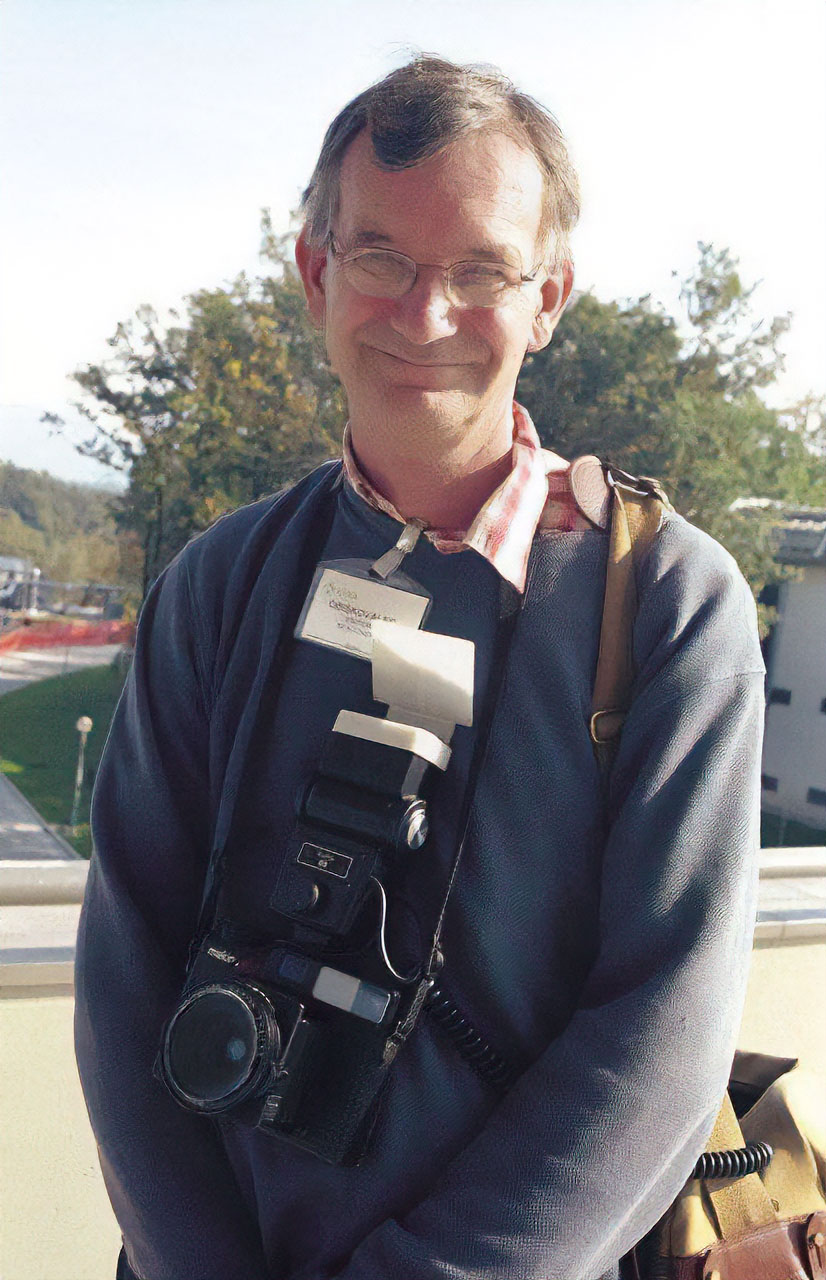
At the time, I was influenced by Martin Parr and was already interested in what colour could do photographically, so I found the change exciting.
A few years later, I was dealing with another major change: digital photography.
Before buying my first digital SLR, a Nikon D1, I attended a three-day workshop with Andrew Rodney, better known as The Digital Dog and a member of PixelGenius. During the workshop, Andrew went around the room asking what digital equipment people owned. When he got to me, I said I was waiting until after the workshop before deciding.
“Smart man,” he said.
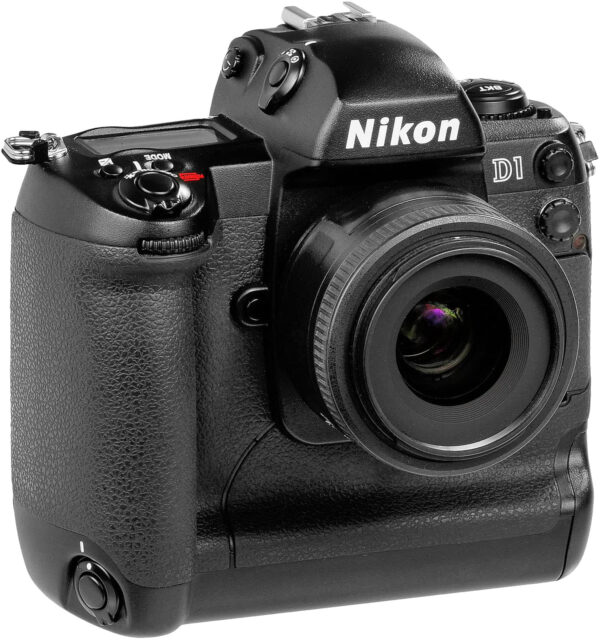
I wasn’t waiting because I thought digital photography wouldn’t work. I wanted to understand it before spending the money.
I took a fairly practical approach. I continued shooting colour film, but had it scanned. Initially I scanned it myself using a Nikon scanner. Later, professional labs scanned the film as part of the printing process. This gave clients both a film original and an inexpensive digital version.
I also created a portfolio to compare the different approaches. I photographed a corporate portrait, a food photograph and an architectural photograph using three different methods. Each was captured on 6×7 transparency film, which was still the accepted professional medium, on 35mm colour negative film that was scanned, and with the Nikon D1.
I then had each version printed to A4.
The point wasn’t to prove that one technology was better than another. I wanted clients to be able to see the results and decide what worked for them.
The mock-ups I created included the original 6×7 transparency, the 35mm colour negative, a CD containing the scans and the digitally captured image, along with the original prints. They could compare the quality, delivery options and costs for themselves.
My clients were quite different. They included Australian Consolidated Press and some of the country’s leading magazines, the international technology company Oracle, and the not-for-profit organisation Anglicare. Their needs were different too. For one client, scale might be important. For another, delivery might matter more. For another, cost could be the deciding factor.
The technology was the same. The WIFM, “What’s in it for me?”, was different.
That has stayed with me.
I also saw what happened to businesses that adopted digital very early. I know of a leading Sydney photographer and a traditional prepress business that invested heavily in high-end digital equipment. I don’t think their decisions were necessarily bad business decisions. They bought the best technology available to them at the time. The problem was timing.
The technology moved very quickly. Expensive equipment was soon replaced by equipment that cost much less and produced the same, or better, results. Competitors could buy the newer equipment for a fraction of the original cost and compete at a lower price.
Being first hadn’t necessarily created a lasting competitive advantage. Sometimes it meant paying more for technology that would soon be cheaper and better.
That wasn’t an argument for avoiding digital. Quite the opposite. It was clear that digital photography was going to change the industry. The challenge was working out how to adopt it without assuming that every new development was going to be the final answer.
The changes went well beyond the camera. I moved from traditional colour darkroom processing and printing, both automated and handcrafted, to digital capture and processing. Digital camera raw capture changed the relationship between capture and processing, metadata changed how images could be described and found, and Digital Asset Management changed how organisations could manage their growing collections of images. Colour management was another important part of the transition.
Each technology solved some problems and created others. It also changed who was responsible for what.
Early digital photography was criticised for producing poor images. In some ways, that reminds me of the criticism of AI slop today. But I don’t think the problem is necessarily the technology. Poor results can come from poor judgement, poor technique, inappropriate use, or simply failing to check the result properly.
Human-over-the-loop.
For me, that is part of what I call human-over-the-loop. The technology can do more of the work, but a person remains responsible for judging the result before it is delivered to a client, or reaches their customers or audience.
That was why I printed those early digital images. I wanted to see what the technology actually produced. The fact that a specification said a digital camera could do something was less important than what could be seen in the finished print.
There is another part of human-over-the-loop that I think is important, particularly with AI. It’s not just about checking the finished image or video. I believe AI needs to be used ethically, from how the underlying data is acquired, to how the technology is used, to how it is introduced and rolled out.
For me, the fact that something can be done doesn’t automatically make it appropriate to do. That means thinking about where the data comes from, respecting the rights and contributions of others, considering the impact of how the technology is used, and being responsible for the outcome. Documentary photography is a good example. Using AI to remove people from frames or alter what actually happened would be ethically wrong, it changes the record rather than enhances it. That’s different from the darkroom techniques photographers have always used for storytelling. That’s fundamentally different from using AI to speed up colour grading of a corporate portrait, where the client’s needs and expectations are different.
Which brings me to AI.
There is plenty of discussion at the moment about whether AI is good or bad for photography and the creative industries. I’m less interested in that argument than I am in using it.
The approach that worked for me with digital photography seems just as relevant to AI. Test the technology, apply it to real work and see what it can actually do. Then ask the important question: what’s in it for the client?
Can it solve a problem? Can it improve the result? Can it save time? Can it make something possible that wasn’t practical before? Can it reduce a cost without compromising the outcome?
Those are questions that are much easier to answer by trying it than by speculating.
There is also a difference between exploring a technology and making a major investment in it. I can trial an AI tool on a real job without building my business around it. That gives me an opportunity to learn where it is useful, where it isn’t, and where it might provide a genuine benefit to a client.
At the same time, testing doesn’t mean lowering the standard of what gets delivered. Anything produced using new technology still needs to be checked, challenged and judged before it goes out the door.
After decades of working with images, I’ve developed a high level of visual literacy. I can recognise when something isn’t right, but the value of experience is also understanding why it isn’t right and what can be done to fix it. That comes from working through the whole process, from capture and processing through to the finished print and, increasingly, video and digital delivery.

Understanding digital reduces production time, so too can AI.
That’s the human-over-the-loop part. The technology can do more of the work, but the responsibility for the final result remains with the person using it.
I’m not waiting for AI to become mature before using it. By the time everything is settled, much of the opportunity to learn will have gone. Equally, I’m not going to adopt every new tool simply because it is new and exciting.
I’ve seen enough technological change to know that what is cutting edge today can become cheaper, better and quite different tomorrow.
So, is AI too early? I’m not sure that’s the right question. The better question is: what can we do with it now, and is it useful?
That is how I’ve approached most of the significant changes I’ve seen in photography. Not by resisting them, and not by automatically adopting them, but by testing, trying, learning and looking for the benefit to my clients.
Technology will keep changing. The interesting part is working out what is useful.